Define the customer journey
Align the check to onboarding, periodic review, transaction risk or another documented business purpose.
A controlled KYC verification workflow for South African businesses, with purpose, authority, source outcomes and review context in one place.
KYC work becomes difficult when requests, documents, provider responses and reviewer decisions live in different places.
Smart Verify helps teams connect a KYC request to its purpose, authority, selected services, source response and recorded next action without pretending that one lookup replaces compliance judgement.
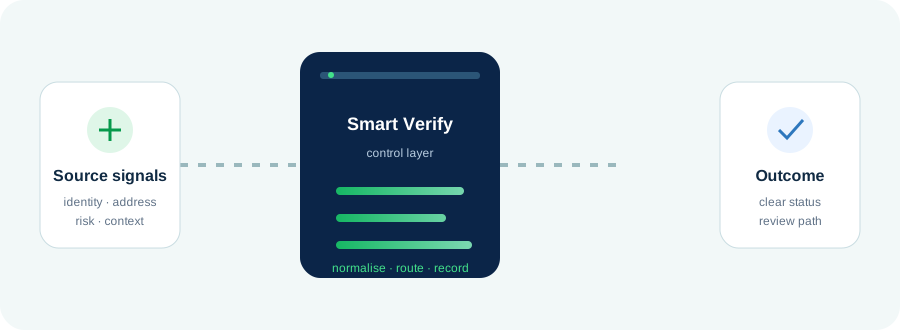
Smart Verify keeps the useful context around a check visible to the people responsible for the next decision.
Align the check to onboarding, periodic review, transaction risk or another documented business purpose.
Connect service selection, subject reference, authority, consent where required and idempotent submission.
Make automated outcomes, missing information and manual review boundaries visible to compliance teams.
Record what was requested, which outcome arrived, who reviewed it and what happened next.
Smart Verify does not replace your compliance programme, accountable institution duties, legal advice or customer due diligence policy. Configure the workflow around your obligations and risk appetite.
Results depend on the selected source, data quality, technical conditions, authority and review policy. Use appropriate human review for consequential decisions.
Tell us what you verify, who owns the decision and where your current process loses time or context.
These answers describe the SmartVerify operating boundary. Your organisation remains responsible for lawful purpose, authority and review policy.
KYC verification helps an organisation collect and assess customer identity and risk context for a defined onboarding or review purpose. It supports, but does not replace, the organisation's compliance programme.
No. SmartVerify is a workflow and verification layer. The accountable institution remains responsible for its obligations, policies, notices, authority, risk assessment and record-keeping.
Yes. SmartVerify is designed to keep manual review visible when a source response is incomplete, uncertain or needs contextual judgement.
Use only the minimum information required for the selected lawful purpose and service. Do not send unnecessary identity numbers, passwords or API keys through general contact channels.