Declare the purpose
State why the check is needed, identify the subject and confirm the authority or consent required by the workflow.
Identity verification infrastructure for South African onboarding, compliance and operations teams. Keep purpose, source outcomes and review context together.
Identity checks are only useful when the team can understand what was requested, what the source returned and what should happen next.
Smart Verify provides a controlled layer around selected identity and KYC workflows, with explicit states for completed, pending, review and uncertain outcomes.
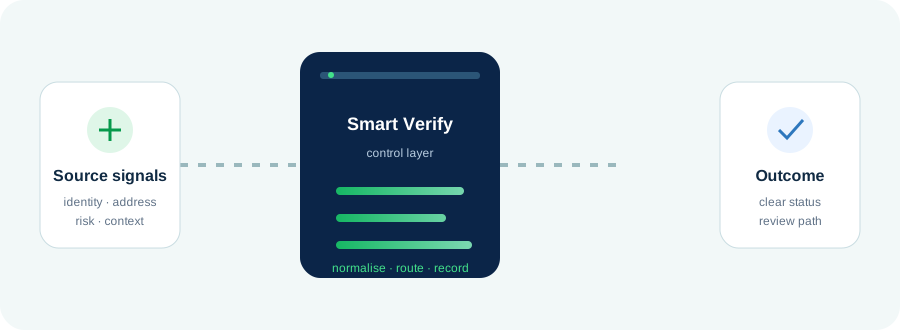
Smart Verify keeps the useful context around a check visible to the people responsible for the next decision.
State why the check is needed, identify the subject and confirm the authority or consent required by the workflow.
Use the appropriate documented service and keep provider-backed status separate from validation or manual states.
Treat pending, failed, incomplete and uncertain responses as states that need the right next action.
Keep the outcome, review context and audit trail together for authorised operators.
Identity verification is not a guarantee of a person’s identity or suitability. It is a decision-support signal that must be used for a lawful purpose and appropriate review.
Results depend on the selected source, data quality, technical conditions, authority and review policy. Use appropriate human review for consequential decisions.
Tell us what you verify, who owns the decision and where your current process loses time or context.
These answers describe the SmartVerify operating boundary. Your organisation remains responsible for lawful purpose, authority and review policy.
Identity verification compares submitted identity information with an authorised source or workflow so a business can make a better-informed decision. SmartVerify keeps the purpose, service state, source outcome and review context together.
No. A verification result is a decision-support signal. Source availability, matching, data quality, authority and review policy still matter, especially for consequential decisions.
Yes. SmartVerify provides a documented integration path for selected workflows. The exact service, account permissions and connected provider action should be confirmed before implementation.
Treat pending, incomplete, failed and uncertain results as explicit review states. Do not silently convert uncertainty into a pass or repeatedly submit a paid request without checking its outcome.